The Anesthesiology Service

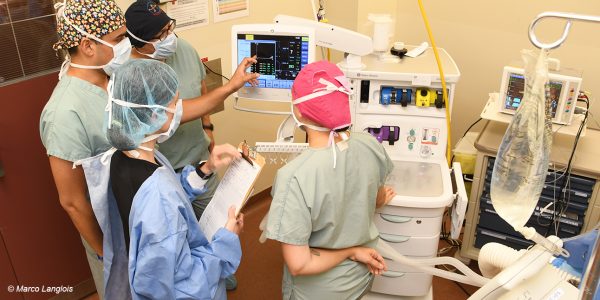
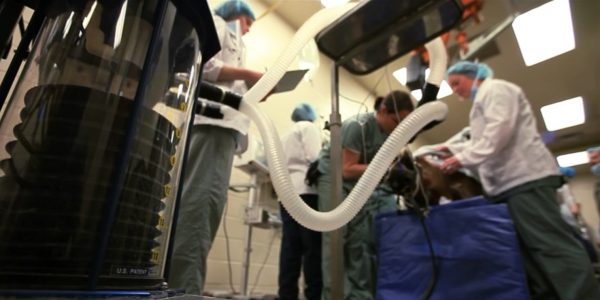
Our clients benefit from the services of the anesthesiology team composed of certified anesthesiologists as well as animal health technicians. The anesthesiology team works closely with the other specialists to ensure high quality care, close surveillance and monitoring during all types of interventions such as surgery or diagnostic imaging.

Passion for the well-being of animals is what drives our anesthesiology team. Therefore, the use of a multimodal approach is favoured to minimise and eliminate any discomfort associated to any potentially painful procedure.

Each animal is individually evaluated to provide personalised, high quality care. Our team uses state-of-the-art technology along with rigorous analgesic practices to allow our clients peace of mind during their animal’s intervention.
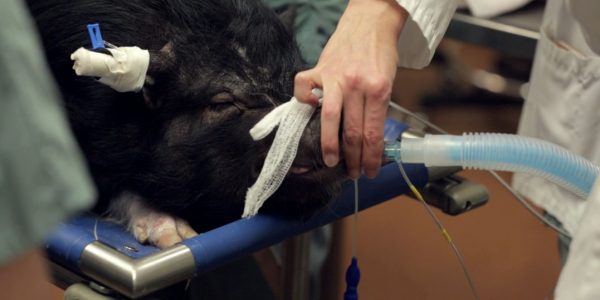
During the final three years of the doctorate in veterinary medicine, the anesthesiology service actively takes part in the training of students in anesthesia for every species. The foundation of their knowledge is taught during the third year. During their fourth year, students can choose between a course in either Large animal or Small animal anesthesia. Finally, during their last academic year, students are evaluated for their clinical skills through a compulsory anesthesia rotation. The goal of the anesthesiology service during this time is to let the students play an active role in the service by guiding them through the anesthesia process of real cases..

Our research program is internationally recognized and focuses on advancing veterinary anesthesia, analgesia and perioperative care across a wide range of animal species.
Our main areas of research include:
Undergraduate students have opportunities to participate in ongoing research projects and, when funding opportunities are available, to develop their own studies under academic supervision. Through this experience, they gain practical exposure to research methodology and learn the theoretical principles, scientific concepts and ethical requirements involved in veterinary research.
Graduate students are trained to formulate relevant research questions, design high-quality studies, critically evaluate scientific evidence and communicate their findings effectively.
Researchers, clinicians and institutions interested in collaborating with our research program are invited to contact us. We also welcome enquiries from individuals interested in pursuing a Master’s degree, PhD, research internship or fellowship within our group.

The highly qualified animal health technicians play a major role in the anesthesiology service. They administer and supervise the anesthesia in small as well as in large animals and in certain exotic species. They are also closely involved in the technical training of students and interns. Among other things, the technicians teach the skills needed to place an intravenous catheter, intubate and monitor the anesthesia.  They work closely with the anesthesiologist to optimise the animal’s anesthesia and manage acute pain in our patients.

Professors
Clinicians
  • Dr. Graeme Doodnaught
  • Dr. Geneviève Gosselin
  • Dr. Marta Garbin
  • Dr. Véronique Martin-Bouyer
Resident
  • Dr. Mariafrancesca Petrucci
  • Dr. Jean-Clément Bernard
  • Dr. Caterina Vicenti
Veterinary technicians
  • Julie Elen Auger Jacob
  • Mélissa Caron
  • Geneviève Déry
  • Léa Ahmed
  • Nancy Larocque
  • Marie-Chrystel Matte-Pigeon